









 RSS
RSS

News for players in the capital market - the right to remain silent and to avoid self-incrimination recognised by the European Court of Justice in administrative investigations for insider dealing
24 Martie 2021 Alexandru Ambrozie, Partner and Head of the PNSA White Collar & Defense Practice; Ana Stoenescu, Senior Associate White Collar & Defense and Andra Vieriu, Associate Capital Markets
While an enthusiastic approach would like to believe that the Romanian administrative authorities will acknowledge the right to remain silent and to avoid self-incrimination in administrative investigations where such proceedings may later have criminal implications, it is up to capital market players and individuals under investigation to now know when and how they can exercise their rights.
|
|
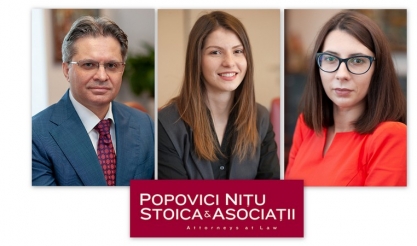
Alexandru Ambrozie (left), Partner and Head of the PNSA White Collar & Defense Practice; Ana Stoenescu, Senior Associate White Collar & Defense and Andra Vieriu (right), Associate Capital Markets |



I. How it started – the facts
It is no surprise that it all started with a fine, but in our case one fine basically led to another, namely the National Companies and Stock Exchange Commission of Italy (Consob) imposed a fine of EUR 300,000 on an individual for the administrative offences of insider dealing and unlawful disclosure of inside information, while also applying another fine of EUR 50,000 for failure to cooperate during the administrative investigation.
The latter was imposed due to the fact that after repeatedly postponing the date of the hearing to which he had been summoned in his capacity as a person aware of the facts, he had declined to answer the questions when he appeared at the hearing. Whether this was a sanctionable action or simply the exercise of his legal rights was soon to be determined…
The individual challenged the decision before the Italian courts, claiming his right to remain silent and to avoid self-incrimination. This led to a question of constitutionality concerning the provision of Italian law on the basis of which the administrative fine for failure to cooperate was imposed, question which was referred by the Italian courts to the Constitutional Court of Italy.
The Constitutional Court of Italy pointed out that, under Italian law, insider dealing constitutes both an administrative offence and a criminal offence and was adopted in performance to specific obligations under the EU legislation, namely Directive 2003/6/EC (MAD)1 and Regulation no. 596/2014 (MAR)2.
Eventually, the Constitutional Court of Italy called upon the European Court of Justice3 to clarify whether the MAD and MAR provisions read in the light of Articles 47 (fair trial) and 48 (presumption of innocence and right of defence) of the Charter of Fundamental Rights of the European Union could be interpreted as allowing Member States not to sanction the individuals who refuse to provide the administrative authority with answers that are capable of establishing their liability for an offence that is punishable by administrative sanctions of criminal nature.
II. ECJ Judgement; 5 key points
· ECJ recognises the right to remain silent and to avoid self-incrimination for individuals who are subject to an administrative investigation for insider dealing that is capable of establishing their liability for an offence that is punishable by either administrative sanctions of a criminal nature or criminal sanctions in case of criminal liability, reconfirming a strong case-law of European Court of Human Rights4 and Supreme Court of the United States5;
· ECJ holds that the need to respect the right to remain silent in an administrative investigation conducted by an authority could also stem from the fact that, in accordance with national legislation, the evidence obtained in those proceedings may be used in criminal proceedings against a person in order to establish that a criminal offence was committed;
· The right to remain silent cannot reasonably be confined to statements of admission of wrongdoing or to remarks which directly incriminate the person questioned, but rather also covers information on questions of fact which may subsequently be used in support of the prosecution and may thus have a bearing on the conviction or the penalty imposed on that person;
· The right to remain silent cannot justify every failure to cooperate with the competent authorities, such as a refusal to appear at a hearing planned by those authorities or delaying tactics designed to postpone it;
· The right to remain silent is intended to apply in the context of proceedings which may lead to the imposition of administrative sanctions of criminal nature. For determining these types of sanctions, three criteria were highlighted by the Court: (i) the legal classification of the offence under national law; (ii) the intrinsic nature of the offence; and (iii) the degree of severity of the penalty that the person concerned is liable to incur.
III. How we can benefit - implications in Romania
There is no doubt that the ECJ ruling represents a matter of interest for capital market players in Romania, but also for the individuals subject to other administrative investigations, as (i) MAR provisions are directly applicable in Romania and also transposed in the national legislation through Issuers Law no. 24/2017 and (ii) there are often administrative investigations where the individuals are required to cooperate with the competent authorities and to provide answers that, eventually, are capable of establishing their liability in a further criminal investigation.
Even more so, in Romania, administrative and criminal proceedings go hand in hand, as insider dealing and unlawful disclosure of inside information constitute both an administrative offence (when the penalty can reach a maximum amount of EUR 5,000,000) and a criminal offence. Also, refusing to cooperate with the Financial Supervisory Authority may be sanctioned with a warning or a penalty that can reach approximately EUR 400,000.
In light of the above, the good news is that individuals investigated by the Financial Supervisory Authority for insider dealing and unlawful disclosure of inside information or, in certain circumstances, by other administrative authorities may claim the right to remain silent and to avoid self-incrimination.
However, before doing so, the individuals should carefully assess if the right to remain silent and to avoid self-incrimination is applicable in their specific case, namely whether the potential administrative sanction is of criminal nature or if the risk of a further criminal investigation is actual or may be reasonably anticipated. In this endeavour, the case-law of the European Court of Human Rights (ECHR) should be taken into account, especially the rulings in which ECHR has determined that the right to remain silent and to avoid self-incrimination was not applicable, as any similarities to such cases would present a risk to the individuals under investigation.
A relevant case worth pointing out is Weh v. Austria, where the Court noted that:
“45. (…) The Court noted that there were no pending or anticipated criminal proceedings against the applicant and the fact that he may have lied in order to prevent the revenue authorities from uncovering conduct which might possibly lead to a prosecution did not suffice to bring the privilege against self-incrimination into play.”;
”50. The heart of the applicant’s complaint is that he was punished for failure to give information which may have incriminated him in the context of criminal proceedings for speeding. However, neither at the time when the applicant was requested to disclose the driver of his car nor thereafter were these proceedings against him”; and
“53. (…) There were clearly no proceedings for speeding pending against the applicant and it cannot even be said that they were anticipated as the authorities did not have any element of suspicion against him”.
*
* *
In a nutshell, the ECJ Judgement is a fine starting point in reaffirming that the individuals should benefit from the right to remain silent and to avoid self-incrimination, imposing boundaries when the administrative authorities are establishing administrative sanctions of a criminal nature or are investigating facts which are likely to become the subject of a criminal investigation.
While an enthusiastic approach would like to believe that the Romanian administrative authorities will acknowledge the right to remain silent and to avoid self-incrimination in administrative investigations where such proceedings may later have criminal implications, it is up to capital market players and individuals under investigation to now know when and how they can exercise their rights.
[1] Directive 2003/6/EC of the European Parliament and of the Council on insider dealing and market manipulation
[2] Regulation no. 596/2014 of the European Parliament and of the Council on market abuse and repealing Directive 2003/6 and Commission Directives 2003/124/EC, 2003/125/EC and 2004/72/EC
[3] The ECJ Judgement in Case C-481/19
[4] Funke v. France, Decision issued on February 25, 1993; Saunders v. United Kingdom, ECHR Decision issued on December 17, 1996; J.B. v. Switzerland, ECHR Decision issued on May 3, 2001; E.J.L., G.M.R. & A.K.P. v. United Kingdom, Decision issued on September 19, 2000.
[5] Boyd v. United States, 116 U.S. 616, Decision issued on February 1, 1886; Fisher v. United States, 425 U.S. 391, Decision issued on April 21, 1976; Couch v. United States, 409 U.S. 322, Decision issued on January 9, 1973; United States v. Doe, 465 U.S. 605, Supreme Court of United Stated Decision issued on February 28, 1984; United States v. Hubbell, 530 U.S. 27, Supreme Court of United States Decision issued on June 5, 2000.



| Publicitate pe BizLawyer? |
  |
| Articol 3193 / 4685 | Următorul articol |
| Publicitate pe BizLawyer? |
                                    |
Mușat & Asociații obține o decizie de referință pentru salariații Hidroconstrucția, societate în reorganizare judiciară, cu impact estimat de 1,2 mil. € | Echipa, coordonată de Mihai Popa (Deputy Managing Partner)
Filip & Company a gestionat juridic IPO-ul Christian Tour, încheiat cu succes. Au fost atrase fonduri de 149 mil. lei pentru accelerarea consolidării prin M&A, extindere organică și transformare digitală
NNDKP a asistat Raiffeisen Bank România în legătură cu finanțarea grupului Monza Ares în vederea achiziției Brain Institute și integrării acestuia în structura grupului | Alina Radu (Partener) și Cătălina Dan (Asociat Senior), în prim plan
Mitel & Asociații a asistat vanzatorii în tranzacția prin care Grupul Monza Ares, susținut de Highlander Partners, a preluat centrul privat de neurochirurgie Brain Institute | Mădălina Mitel, coordonatoarea echipei de proiect: ”Pentru noi, un mandat de M&A reușit este acela în care soluția juridică susține logica economică a tranzacției și permite părților să meargă mai departe cu un proiect viabil”
NNDKP a asistat grupul PPC în procesul de negociere pentru încheierea noilor contracte colective de muncă | Roxana Abrașu (Partener) și Daniel Stăncescu (Managing Associate), în prim plan
RTPR asistă Silcotub la achiziția Artrom Steel Tubes. Echipa, coordonată de Mihai Ristici (Partener) și Vlad Stamatescu (Counsel)
Florian Nițu (PNSA), singurul avocat din România aflat în cursa pentru titlul „CEE Partner of the Year” la ”Legal 500 Central and Eastern Europe Awards 2026” - nu doar într-un an mai bun, ci după două decenii de consecvență în excelență: „Avocatul a devenit, în fapt, un ‘integrator’ în proiectele complexe, responsabil de alinierea componentelor juridice, comerciale și operaționale ale unei tranzacții. Clientul este azi un partener strategic, sofisticat și continuu implicat în gestionarea serviciului avocațial”
Mandatele sofisticate, în care soluțiile juridice trebuie dublate de înțelegerea mecanismelor economice, confirmă forța practicii de Insolvență & Restructurare a ZRVP, evidențiată în Tier 1 de Legal 500 | Alexandru Iorgulescu (Partener): ”Pot spune că specific practicii noastre sunt mandatele complexe ce reclamă soluții inovatoare, unde lucrăm adesea pe drumuri ‘neumblate’ și în care problemele de dreptul insolvenței se întrepătrund cu cele civile, societare, administrativ-fiscale”
NNDKP a asistat Grupul Saica în legătură cu achiziția Grupului Thimm. Echipa, cordonată de Gabriela Cacerea (Partener)
18 firme de avocatură și 22 de avocați din România, pe lista scurtă pentru Legal 500 - Central and Eastern Europe Awards 2026. Avocați de la Filip & Company, CMS, RTPR, NNDKP, TZA, Bondoc & Asociații și Schoenherr intră în competiție pentru premii regionale, iar Florian Nițu (PNSA) este nominalizat la titlul de ”CEE Partner of the Year”. Doi legal manageri concurează la titlul de ”In-house Lawyer of the Year” în CEE
Ritm alert, tranzacții de referință și expertiză recunoscută | Practica de Energie & Resurse Naturale a RTPR, Tier 1 în Legal 500, gestionează integrat mandate care combină M&A, finanțări verzi, autorizare și reglementare, oferind clienților internaționali și locali suport în proiecte cu miză ridicată. De vorbă cu partenerul Bogdan Cordoș despre tendințele anului 2026, interesul investitorilor și mandatele relevante
ZRVP organizează în data de 11 iunie 2026 dezbaterea „Contractul de antrepriză: de la FIDIC la HG 1 ̸ 2018 – evoluție, adaptare sau compromis?”
-
BizBanker
-
BizLeader
- in curand...
-
SeeNews
in curand...
