








 RSS
RSS

State aid amid COVID-19 outbreak
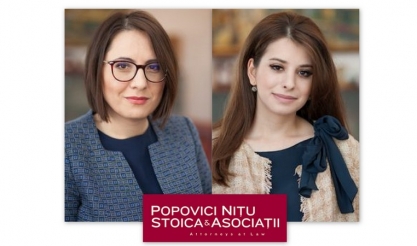
23 Martie 2020 Mihaela Ion (Partner) & Vanessa Nistor (Senior associate) - Popovici Nițu Stoica & Asociații
European Commission stepped in to mitigate the negative consequences on the economy caused by the COVID-19 outbreak.
|
|
Mihaela Ion (Partner) & Vanessa Nistor (Senior Associate) - Popovici Nitu Stoica & Asociatii |


COVID-19 not only represents a worldwide health security issue, but it also triggers significant negative economic consequences as businesses all over encounter disruptions in their activity.
European Commission stepped in to mitigate the negative consequences on the economy caused by the COVID-19 outbreak.
How? What are the actual measures taken by the European Commission?
During yesterday’s speech, Margrethe Vestager, Executive Vice-President of the European Commission stated that it is necessary for the Member States to act fast in order to preserve the continuity of economic activity in such hard times. Therefore, besides support measures that may be granted by the Member States under existing State aid regulations, a temporary new state aid framework has been adopted.
European Commission stepped in to mitigate the negative consequences on the economy caused by the COVID-19 outbreak.
How? What are the actual measures taken by the European Commission?
During yesterday’s speech, Margrethe Vestager, Executive Vice-President of the European Commission stated that it is necessary for the Member States to act fast in order to preserve the continuity of economic activity in such hard times. Therefore, besides support measures that may be granted by the Member States under existing State aid regulations, a temporary new state aid framework has been adopted.
Under this special crisis framework the Member States may give five types of support:
► Direct grants, selective tax advantages and advance payments: Member States will be able to set up schemes to grant up to €800,000 to companies.
► State guarantees for loans taken by companies from banks: The aim is to ensure that banks keep providing loans to consumers.
► Subsidised public loans to companies: granting loans with favourable interest rates to companies.
► Safeguards for banks that channel State aid to the real economy: According to the European Commission “Some Member States plan to build on banks’ existing lending capacities, and use them as a channel for support to businesses – in particular to small and medium-sized companies. The Framework makes clear that such aid is considered as direct aid to the banks’ customers, not to the banks themselves, and gives guidance on how to ensure minimal distortion of competition between banks”.
► Short-term export credit insurance: Additional flexibility on the proof that certain countries are not-marketable risks and thus enabling short-term export credit insurance to be provided by the State where needed.
Further details regarding each type of special support measure may be found here.
This comes after the European Commission set out coordinated response to tackle negative impact of COVID-19 outbreak.
Up until now, only Denmark has notified a state aid scheme related to the COVID-19 pandemic. The European Commission has analysed the Danish aid scheme aiming to compensate organizers for the harm incurred due to cancellation of large event and concluded that such scheme is in line European state aid rules. Worth mentioning that the European Commission did move fast: the state aid was notified on March, 11 and the European Commission approved the said state aid on March, 12.
Through its decision, the European Commission has confirmed that COVID-19 is an exceptional occurrence in the sense of article 107(2)(b) TFEU which stipulates that aid to make good damage caused by natural disasters or exceptional occurrences shall be compatible with the internal market, Member States may grant aids.
In light of the current context, the European Commission expects that other Members states will implement state aid measures. In order to help Member States tackle more efficiently and rapidly the negative consequences of COVID-19 outbreak the Commission has established a dedicated contact point for providing guidance to Member States on this point.
Furthermore, the European Commission’s has published specific guidelines with respect to the information that should be provided for notifications of aid under Article 107(2)(b) – exceptional occurrence.
What about Romania?
According to the Ministry of Public Finances’ press release, the Government has adopted a series of measures aiming at limiting the effects on the economical environment of the COVID-19 outbreak.
The Ministry of Public Finances will implement a multiannual support program for SME’s in order to limit the COVID-19 outbreak:
Credit guarantee in the limit of 80% & subsiding the credit interest rate;
Facilities for companies which encounter financial difficulties;
Prolonging the terms for submission of restructuration of budgetary obligations demands & deadlines for payment of local taxes;
Suspension of enforcement procedures regarding citizens’ payment of taxes obligations;
SME’s may obtain an emergency situation certificate based on which they may postpone paiement of rents & utilities;
For the acquisition of protective equipment gear the Ministry of Public Finances grants a loan to the National Company Unifarm S.A.
Furthermore, there are proposals regarding the introduction of a scheme aid of 300 mil. EUR for supporting TAROM and CFR (national railroad company). Other proposed measures concern the limitation of fiscal obligations in certain economic activities (e.g., no income tax for SME’s employees active in sectors significantly affected by the COVID-19 crisis).



| Publicitate pe BizLawyer? |
  |
| Articol 4413 / 4685 | Următorul articol |
| Publicitate pe BizLawyer? |
                                    |
BREAKING NEWS
ESENTIAL
Mușat & Asociații obține o decizie de referință pentru salariații Hidroconstrucția, societate în reorganizare judiciară, cu impact estimat de 1,2 mil. € | Echipa, coordonată de Mihai Popa (Deputy Managing Partner)
Filip & Company a gestionat juridic IPO-ul Christian Tour, încheiat cu succes. Au fost atrase fonduri de 149 mil. lei pentru accelerarea consolidării prin M&A, extindere organică și transformare digitală
NNDKP a asistat Raiffeisen Bank România în legătură cu finanțarea grupului Monza Ares în vederea achiziției Brain Institute și integrării acestuia în structura grupului | Alina Radu (Partener) și Cătălina Dan (Asociat Senior), în prim plan
Mitel & Asociații a asistat vanzatorii în tranzacția prin care Grupul Monza Ares, susținut de Highlander Partners, a preluat centrul privat de neurochirurgie Brain Institute | Mădălina Mitel, coordonatoarea echipei de proiect: ”Pentru noi, un mandat de M&A reușit este acela în care soluția juridică susține logica economică a tranzacției și permite părților să meargă mai departe cu un proiect viabil”
NNDKP a asistat grupul PPC în procesul de negociere pentru încheierea noilor contracte colective de muncă | Roxana Abrașu (Partener) și Daniel Stăncescu (Managing Associate), în prim plan
RTPR asistă Silcotub la achiziția Artrom Steel Tubes. Echipa, coordonată de Mihai Ristici (Partener) și Vlad Stamatescu (Counsel)
Florian Nițu (PNSA), singurul avocat din România aflat în cursa pentru titlul „CEE Partner of the Year” la ”Legal 500 Central and Eastern Europe Awards 2026” - nu doar într-un an mai bun, ci după două decenii de consecvență în excelență: „Avocatul a devenit, în fapt, un ‘integrator’ în proiectele complexe, responsabil de alinierea componentelor juridice, comerciale și operaționale ale unei tranzacții. Clientul este azi un partener strategic, sofisticat și continuu implicat în gestionarea serviciului avocațial”
Mandatele sofisticate, în care soluțiile juridice trebuie dublate de înțelegerea mecanismelor economice, confirmă forța practicii de Insolvență & Restructurare a ZRVP, evidențiată în Tier 1 de Legal 500 | Alexandru Iorgulescu (Partener): ”Pot spune că specific practicii noastre sunt mandatele complexe ce reclamă soluții inovatoare, unde lucrăm adesea pe drumuri ‘neumblate’ și în care problemele de dreptul insolvenței se întrepătrund cu cele civile, societare, administrativ-fiscale”
NNDKP a asistat Grupul Saica în legătură cu achiziția Grupului Thimm. Echipa, cordonată de Gabriela Cacerea (Partener)
18 firme de avocatură și 22 de avocați din România, pe lista scurtă pentru Legal 500 - Central and Eastern Europe Awards 2026. Avocați de la Filip & Company, CMS, RTPR, NNDKP, TZA, Bondoc & Asociații și Schoenherr intră în competiție pentru premii regionale, iar Florian Nițu (PNSA) este nominalizat la titlul de ”CEE Partner of the Year”. Doi legal manageri concurează la titlul de ”In-house Lawyer of the Year” în CEE
Ritm alert, tranzacții de referință și expertiză recunoscută | Practica de Energie & Resurse Naturale a RTPR, Tier 1 în Legal 500, gestionează integrat mandate care combină M&A, finanțări verzi, autorizare și reglementare, oferind clienților internaționali și locali suport în proiecte cu miză ridicată. De vorbă cu partenerul Bogdan Cordoș despre tendințele anului 2026, interesul investitorilor și mandatele relevante
ZRVP organizează în data de 11 iunie 2026 dezbaterea „Contractul de antrepriză: de la FIDIC la HG 1 ̸ 2018 – evoluție, adaptare sau compromis?”
Citeste pe SeeNews Digital Network
-
BizBanker
-
BizLeader
- in curand...
-
SeeNews
in curand...
